By Techman
Introduction: At the Modern Confluence of Atoms and Bits
In the sweltering summer of 2010, the global cybersecurity community was paralyzed by a chilling, invisible tension. An unprecedented piece of malicious code was circulating silently across tens of thousands of computer screens worldwide. Like a ghost, it replicated stealthily, yet it paradoxically “did nothing”—it stole no banking passwords, locked no hard drives, and demanded no ransom. Silicon Valley and Washington tech giants dubbed it “Stuxnet,” but no one knew whose head this multi-million-dollar digital Damocles’ sword was suspended over.
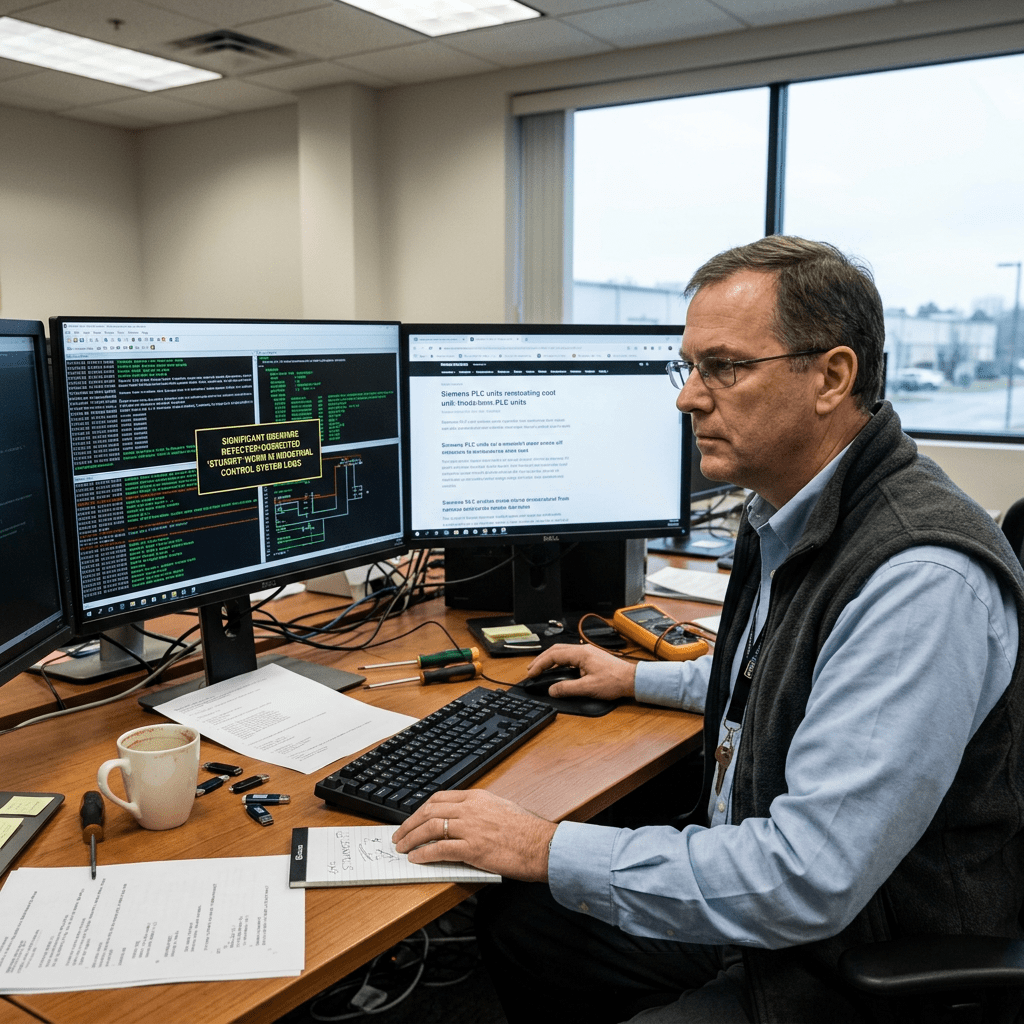
That was until a sharp-cut German engineer, sporting his trademark casual attire, hit the enter key at his desk in Hamburg. His name is Ralph Langner. Over the following weeks, he and his lean team embarked on an extraordinary journey of digital archeology, reverse-engineering the mysterious worm. While the rest of the world was looking for affected operating systems, Langner’s gaze pierced through the cold, glowing monitors straight into the heavy, rumbling machinery of the physical world.
“This isn’t about data theft,” Langner remarked in a low, definitive tone the day he reached his conclusion. “This is a cyber assassination. Its target is factories, steel, and spinning centrifuges.”
Langner was the first to unveil the grand mystery to the world: Stuxnet’s ultimate target was the uranium enrichment centrifuges at the Natanz nuclear facility in Iran. The code had brilliantly infiltrated Siemens Programmable Logic Controllers (PLCs). On one hand, it aggressively spoofed sensor data to feed the control room screens a perfectly fabricated illusion that “all was well.” On the other, it secretly commanded the motors to spin at catastrophic speeds until those highly sophisticated, million-dollar centrifuges tore themselves apart in a screeching frenzy of tearing metal.
In that singular moment, the world woke up to a terrifying new reality. Ralph Langner’s name was forever etched into the monument of industrial cybersecurity. He wasn’t a conventional Silicon Valley hacker; he was the pioneer who first realized how a digital weapon could physically annihilate the real world.
I: The Lone Maverick with a German Engineering Soul
If you attempt to measure Langner by the standard yardstick of a Silicon Valley “tech bro,” you will be profoundly disappointed. He wears no hoodies, drinks no meal-replacement shakes, and instead carries the unyielding, meticulous discipline of an old-school German engineer.
Langner’s upbringing reads like a classic textbook on the German Ingenieurkunst (the art of engineering). As a young man, he came of age during the golden intersection of computer science and traditional industrial automation. Steeped in Germany’s rigorous higher education system and its deeply rooted electrical engineering culture, he resisted the urge to dive blindly into the burgeoning dot-com bubble. Instead, he developed an almost obsessive fascination with cybernetics, industrial fieldbuses, and the hard relay logic that dictates the movement of massive factories.
In 1988, while the world was cheering the early dawn of consumer PC operating systems, Langner founded his own engineering consultancy in Hamburg (Langner GmbH).
For the next two decades, the bulk of his life was spent amidst the molten steel of rolling mills, the sprawling pipelines of chemical plants, and the giant roaring turbines of power stations. This extensive, hands-on experience in the trenches gave Langner a unique intuition: He knew how machines breathed.
“Standard IT security experts only understand code,” Langner later reflected. “But I understand physics.” This core German engineering ethos provided him with the cross-disciplinary superpower to straddle two entirely separate universes. What looked like a meaningless string of hexadecimal characters to an IT specialist was, to Langner, an invisible noose slowly choking an industrial valve.
II: A Titan at the Epicenter of the Storm
Following the Stuxnet breakthrough, Langner was propelled to the absolute pinnacle of the global security stage. Prominent business media hailed him as “the Prometheus who shattered the digital dark.”
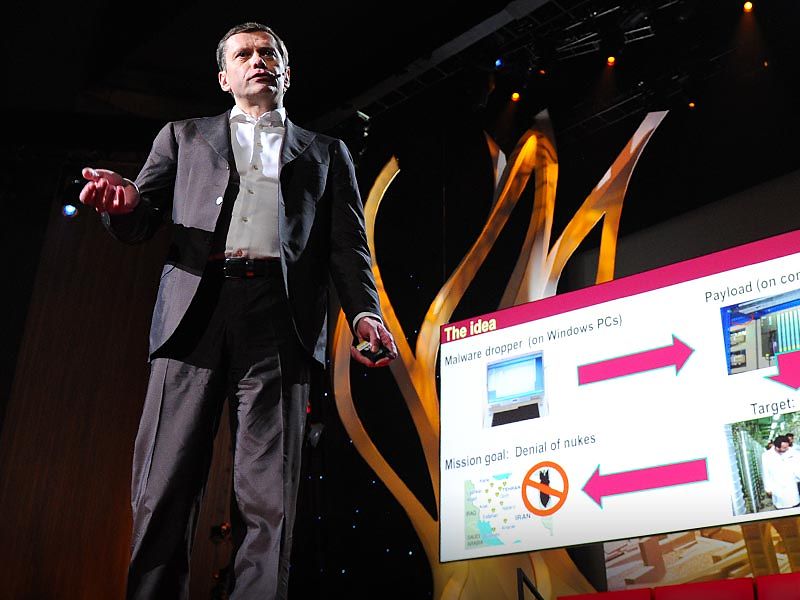
In 2011, Langner stepped onto the global stage at the TED conference. In his presentation, Cracking Stuxnet, a 21st-century cyber weapon—now widely revered as an absolute classic in cybersecurity history—he used his calm, deliberate German accent to break down complex automation logic into a gripping, real-world techno-thriller. That day, the public realized for the very first time that an invisible USB drive could quite literally derail a sovereign state’s nuclear program.
His impact was rapid and widespread. His 2011 TED Talk visually demystified “Cyber Warfare” to the global public for the very first time. Following this success, he founded The Langner Group and launched OTbase, setting the gold standard for infrastructure defense. As a top-tier strategic advisor, he was soon counseling the U.S. Senate, NATO, and the International Atomic Energy Agency (IAEA) on high-level cyber resilience.
The cold-war era tanks and ballistic missiles were suddenly cast into yesterday’s shadow; the modern battleground had officially shifted to the firmware and backplanes of industrial control systems. Langner’s title rapidly evolved from “technical consultant” to “national security strategist.” He became a frequent advisor in Washington, Brussels, and Vienna, counseling the U.S. Senate Homeland Security Committee, NATO, and the IAEA at the highest strategic levels.
The Langner Group ceased to be just a standard consultancy; it transformed into an elite global think-tank for critical infrastructure defense. He became widely recognized as the pivotal figure who dragged industrial cybersecurity out from the obscure fringes and thrust it into the dead center of national defense.
III: A Clash of Dimensions — The Fatal Rift Between IT and OT
Throughout his writings and global keynotes, Langner has tirelessly emphasized a critical, fatal error that the mainstream tech industry long ignored: blindly copy-pasting office IT security protocols into heavy factory environments.
This is what he defines as the “clash of dimensions” between Information Technology (IT) and Operational Technology (OT). These two worlds operate on fundamental philosophies that are completely distinct, and occasionally, mutually exclusive.
IT security is fundamentally data-centric, placing Confidentiality at the top of its priorities. It focuses on protecting passwords from leaking and ensuring robust data encryption through frequent patching, mandatory system reboots, and high-overhead encryption algorithms. When an IT system fails or gets breached, the standard outcomes are crashed websites, data leaks, and financial liabilities.
OT security, by contrast, is entirely physics-centric, meaning that Availability and Physical Safety always come first. The ultimate goal is ensuring the production line never stops for a single second and machines do not explode. Because of this, OT environments are extremely resistant to reboots, as a single mistimed patch can desynchronize a control loop and crash an entire plant. The worst-case outcome here is not a data leak, but physical destruction—grid blackouts, chemical plant explosions, and direct danger to human life.
life.
”In the IT world, if a system gets a virus, the worst case is a blue screen and a reboot,” Langner pointed out succinctly. “In the OT world, if a controller is maliciously manipulated, you’re looking at a collapsing smokestack or a reactor meltdown.”
This fundamental divergence explains why standard firewalls and consumer anti-virus software are virtually useless on a factory floor. OT security is not about preventing “information loss”—it is about preventing an adversary from using a few lines of code as a lever to trigger catastrophic disasters in the physical world.
IV: The Future Line of Defense — Safeguarding Society’s Bedrock
Looking ahead across the horizon of our deeply interconnected world, Langner’s early prophecies are materializing with fierce velocity.
With the sweeping deployment of smart grids, automated water systems, and fully unmanned gigafactories, the final buffer zone between the digital and physical domains has utterly dissolved. Every step of a plant’s “digital transformation” brings massive spikes in operational efficiency, but it also exponentially expands its attack surface. Today’s modern threat actors and nation-state cyber forces are no longer just targeting banking databases; they are aiming for the main valves of oil pipelines, the switchgear of city grids, and the chemical dosing systems of water treatment facilities.
How do we execute robust OT security and ensure the “Cyber Resilience” of our critical infrastructure in this hyper-connected, high-vulnerability era? This has rapidly become the ultimate survival test for enterprise operations and societal stability alike.
The definitive answer championed by Langner and leading industry strategists hinges on a critical paradigm shift: moving from “absolute perimeter defense” to “engineered resilience,” while completely tearing down the walls of supply chain mistrust.
- Embracing “Operate Under Compromise”: Faced with highly sophisticated, stealthy cyber attacks, we must accept the reality that systems will eventually be breached. Future OT security shouldn’t just aim for zero infections. Instead, it must focus on building systems that can “fight through the pain”—ensuring the core production line keeps running safely under duress and can rapidly self-heal its physical states.
- Dismantling Silos to Foster Ecosystem Trust: This remains the most critical vulnerability. Historically, industrial asset owners and upstream automation supply chain vendors (the automation giants producing PLCs, SCADA, and DCS systems) have operated within a trust deficit. Vendors often lock down low-level architectures to protect intellectual property, leaving customers blind to hidden vulnerabilities embedded within their infrastructure.
Moving forward, whether you are an energy titan or a baseline automation vendor, the industry must forge a deep, collaborative alliance rooted in “Security by Design.” Supply chain vendors must bake defense into the DNA of their hardware before it leaves the factory floor, offering complete transparency via Software Bills of Materials (SBOMs). Simultaneously, enterprise operators must maintain total asset visibility and continuous operational monitoring.
In this new era where bits dominate atoms, the ramparts of our industrial empires are no longer built of concrete and steel. They are woven out of trust, collaboration, and highly resilient architecture. Just as Ralph Langner has demonstrated throughout his career: defending this invisible frontier is nothing less than defending the foundational bedrock of modern human civilization.
To see a firsthand breakdown of how Ralph Langner systematically dismantled the world’s most shocking cyber weapon, watch his definitive TED presentation: Ralph Langner: Cracking Stuxnet, a 21st-century cyber weapon. In this historic talk, he explains in lucid terms the true nature of digital weapons and how they have permanently altered the future of global infrastructure.




 ZHIDAO.blog
Leave a comment